ADHDers can find it challenging to hold themselves accountable, especially if the task is not interesting or novel and so external structures are very helpful to maintain productivity in these situations. I had a great conversation with Hannah Dell’Armi last week to ask her about how she uses body doubling and accountability to boost her productivity.
Hannah participates in live virtual body doubling sessions where participants declare their tasks and work alongside others virtually. This collective environment, even if not directly interactive, helps her stay committed to her tasks. She also joins TikTok or Facebook live sessions for accountability.
In-Person Accountability
For particularly challenging or undesirable tasks, Hannah finds in-person accountability more effective. She schedules specific days to go into the office to work on tasks using the presence of colleagues for accountability. This strategy helps her complete tasks she would otherwise avoid.
Social Accountability and Networking
Hannah taps into her network for accountability, and mentioned women’s networks and informal meet-ups that help her stay productive. These networks not only provide a structure but also a social element that helps her commit to tasks. She attends local network events if they align with her schedule for additional support and accountability.
Gamification of Tasks
To make task management more engaging, Hannah uses apps like Forest: Focus for Productivity. The app allows the user to set a timer for focused work sessions, they are rewarded with virtual trees. If you stop the timer your current tree withers, motivating users to continue with the timer and not use their phone.
Digital Tools and Accessibility
We discussed the benefit and limitations of various digital tools and workplace accommodations for productivity, especially in relation to Hannah’s needs relating to ADHD. She expresses a desire for more autonomy in choosing tools that specifically meet her needs, rather than being limited to what is provided by employers or standard software.
Hannah employs several other specific strategies to enhance her productivity:
- She uses an Apple watch to set reminders instantly when tasks come to mind. This reduces the friction required by other methods for example writing something down, finding a pen and paper, writing the reminder (if it has not already disappeared from memory). Finding somewhere to put the reminder where it will be seen at the right time.
- The “rubber ducking” method allows her to talk through tasks or problems to clarify her thoughts. This could be with an inanimate object such as a rubber duck or more usually a person.
- Hannah closely monitors her peak productivity times and adjusts her work schedule to match.
- Regularly reviewing and adjusting organisational tools and strategies helps her find what best suits her current needs and work demands.
- Setting specific, short-term deadlines for tasks creates urgency and helps avoid procrastination.
- Hannah is ultra organised at work which is common for people with ADHD, either that or completely disorganised.
Each of these highlights different ways Hannah manages her productivity, particularly in the context of her ADHD. By combining digital tools, gamification, and social accountability, she effectively mitigates the challenges posed by tasks which are not inherently motivating.
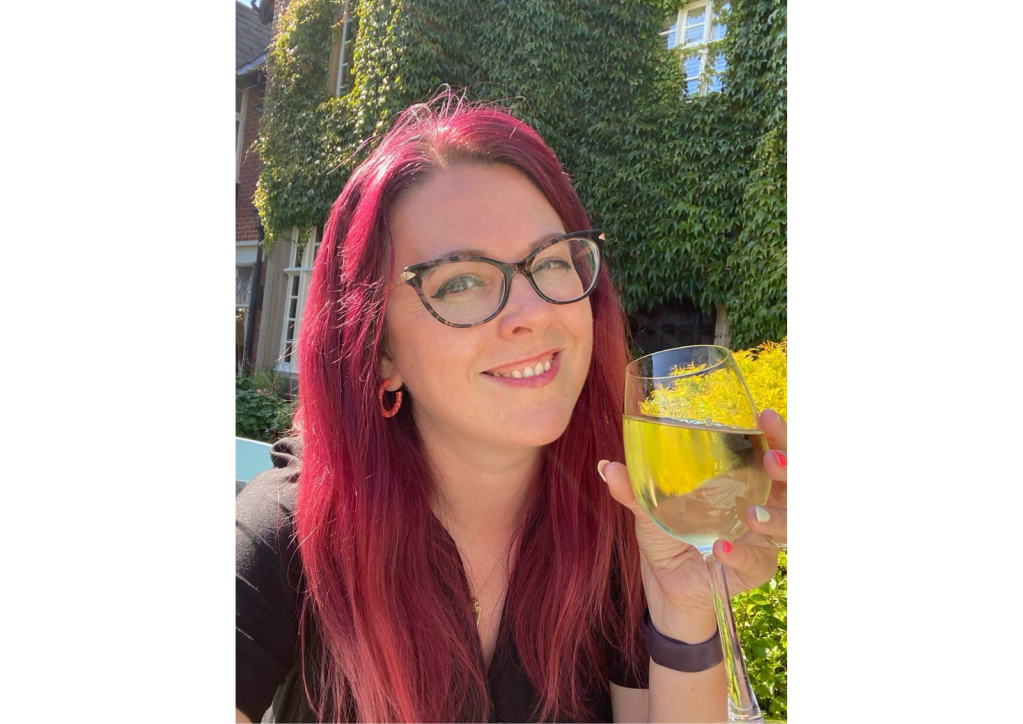
Hannah is a Lead Agile Coach at the Department for Work and Pension (DWP), where she focuses on helping business areas adopt agile and lean practices through Systemic Agile Coaching.
A Coach, Mentor and #IAmRemarkable facilitator, Hannah is passionate about building the next generation of female digital talent and works with several charities aiming to break the bias and build awareness of digital opportunities for those from low socio-economic backgrounds.
The terms ‘Body Doubling’ and ‘Accountability’ are often used interchangeably. If I am working on my own thing alongside someone else who is working on their own thing and we are both being motivated by that, I call that Body Doubling.
I run a body doubling session on Monday and Friday mornings. Here is some more detail.
I consider a session Accountability if the person needs help to plan, prioritise or just to talk through their task(s) to get started and keep going. I have worked with lots of people in this way and can see when they have started doing something else even on a Zoom call. I had one client who I needed to regularly ask if they had embarked on a side quest. They usually had.
Do you use any of these techniques, or others? What are the tasks you find really challenging to get started on or to complete? If I had a service to help with this what must it include to be useful?

 pixlz
pixlz 
Leave a comment